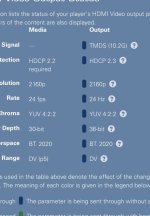
There is no change in color space from the C to K. When people talk about chroma resolution, they mean very specifically resolution/sharpness. This isn't literally how it works, but a good mental model is to imagine that 4:2:0 gives you a 4K image in green, and then a 1080p image in blue and red. Your display then upscales the blue and red colors and gives you a 4K image where only the green channel actually has 4K resolution. 4:4:4 gives you 4K images in green, blue, and red.
Famously, human eyes are terrible at color resolution, so this is really hard to see in normal image content. It's a real thing, it's easy to concoct test patterns that show it -- and it's very easy to see in computer UI content, where you might have one-line pixels that differ from each other only by one of the color channels, which is why TVs always support 4:4:4 in their PC modes. But in normal video content, what you should expect to see is veeeeerrrrrryyyy subtle bits of distinctive color sharpness on parts of the image that do not differ significantly in average brightness, but do differ in hue. Maybe a field of multicolored flowers would be a good "real-world" bit of demo content for this?
Another way to contextualize this: 8K 4:2:0 content is (using this simplified mental model) giving you 8K green, and 4K red and blue. So 4K 4:4:4 is going to be giving you the least important bits of a 4K to 8K jump. If you have been negative about the jump to 8K, you'll want to be realistic that the 4:4:4 jump is exactly an 8K jump minus its most impactful sharpness deltas.
(4:2:2, of course, is only half the jump between 4:2:0 and 4:4:4, so even less significant than that. It doesn't even get you all the way to 8K 4:2:0 chroma.)